
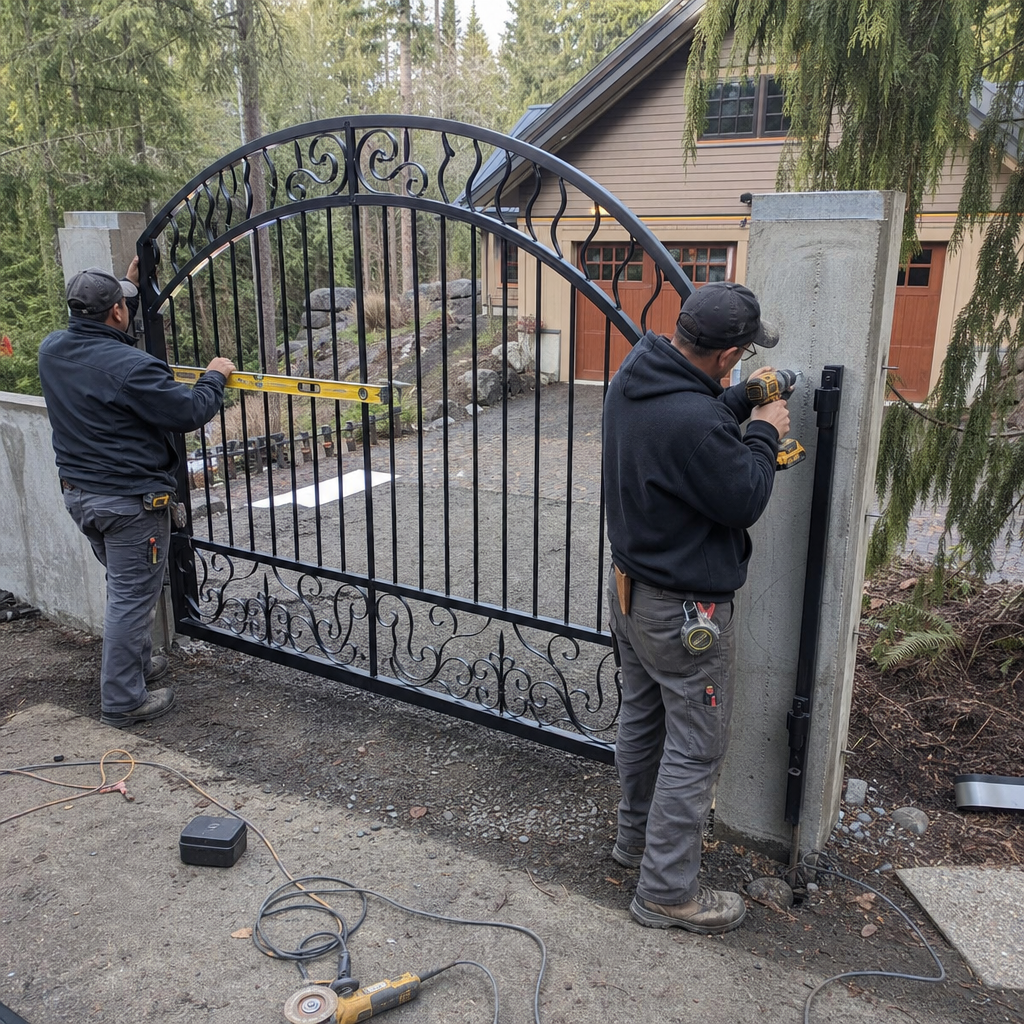
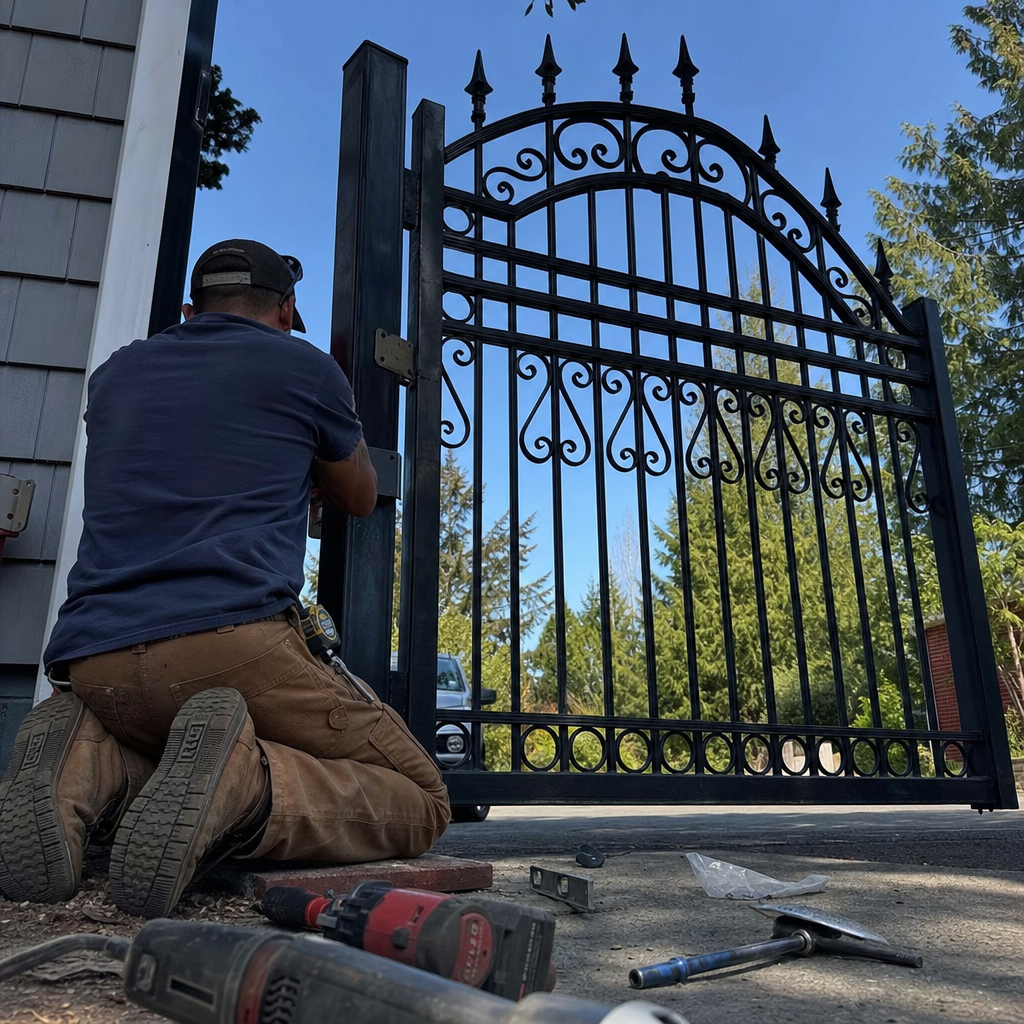
Fast, Reliable Gate Installation Across Sandy
Gate installation in Sandy, OR typically runs $2,800–$6,500 for most residential driveway and acreage properties, with automated systems on rural lots toward the higher end. We’re usually on-site in Sandy within 24–48 hours of your call, and we carry the gate brands and hardware that actually hold up here — not the stuff that works fine in Portland but fails after one Sandy winter. Call (855) 275-6878 for a free estimate.
We’ve been installing gates in Sandy long enough to know that a gate that looks perfect in September can be a frozen, sagging mess by February. The elevation, the wet snow, the clay — it all matters. Our Gate Installation team builds for what this place actually throws at it.
Why Liberty Bell Gate Repair Washington Is Sandy’s Preferred Gate Installation Company
Sandy isn’t a Portland suburb with a few extra trees. It’s a thousand feet up, the last real town before Mount Hood, and the gates we install here face conditions that flatland contractors rarely account for. We’ve learned that the hard way — 14 years, one trade — and now we spec every Sandy job for freeze-thaw resilience, wet-snow load, and the kind of ground movement that heaves fence posts after a single winter.
Our reputation here is built on not having to come back. Nearly 900 neighbors agree — 869 verified reviews averaging 4.7 stars — and that volume matters because it means we’ve seen the failure modes before they happen. David Martinez, our owner and lead technician, diagnoses every Sandy installation himself. He’s the one who specs the deeper footings for your sliding gate track, who catches that your acreage lot off Bluff Road needs strut bracing for snow load, who makes sure the hardware is stainless or galvanized rather than the powder-coated stuff that rusts solid by March.
We don’t dispatch subs. We don’t hand you off to a crew you’ve never met. When you call (855) 275-6878, David’s the one who shows up, measures your driveway slope, checks your existing fence line for plumb, and gives you an upfront price before any dirt gets moved.
Our Gate Installation Services in Sandy
Driveway Gate Installation in Sandy
Most Sandy properties need a driveway gate that handles more than vehicle traffic — it’s the primary security and livestock control for acreage lots along Highway 26 and the rural corridors branching north and south. We install steel, aluminum, and reinforced wood driveway gates sized for your actual approach: wide enough for farm equipment if you need it, automated with keypad or remote access if you don’t want to climb out in freezing rain. On gravel driveways — common on properties near Ten Eyck Road — we pay special attention to gate swing radius and post footing depth, because gravel shifts and frost heave will torque a poorly set post within two seasons.
Sliding Gate Installation in Sandy
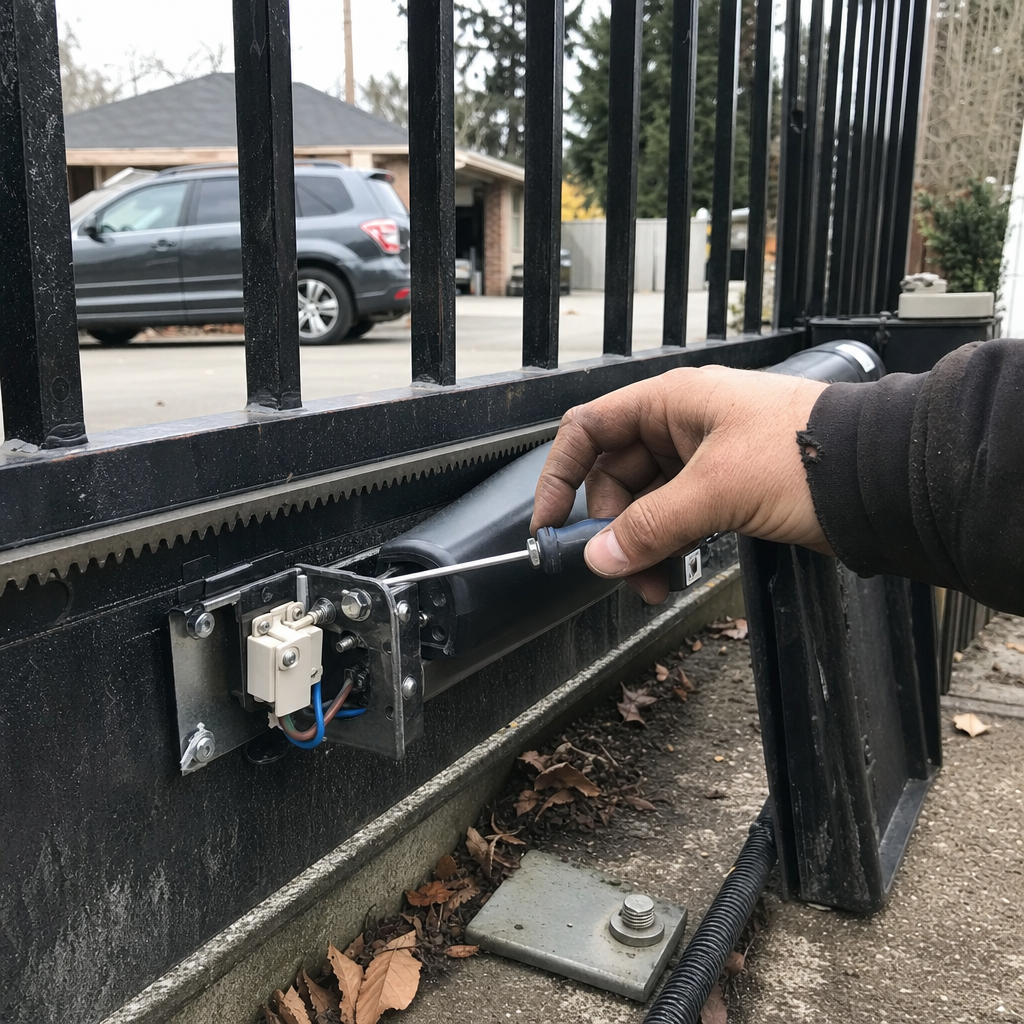
Sliding gates make sense for Sandy’s long, sloped driveways and properties where a swing gate would need clearance you don’t have. But here’s what kills sliding gates in this town: the track. Sandy’s dense clay soils and genuine freeze-thaw cycles heave concrete and shift metal in ways that Portland’s milder winters rarely produce. We install sliding gate tracks on deeper footings with adjustable brackets — hardware that lets us realign the track after ground movement without tearing the whole system out. On a horse property off Ten Eyck Road, we installed a heavy-duty LiftMaster swing gate opener after the previous unit’s underground conduit had shifted from ground movement, shorting the loop detector. We replaced the conduit with flexible PVC and set the posts in 4-foot-deep concrete piers to resist frost heave. That job taught us what we now spec standard for Sandy’s rural installations.
Swing Gate Installation in Sandy
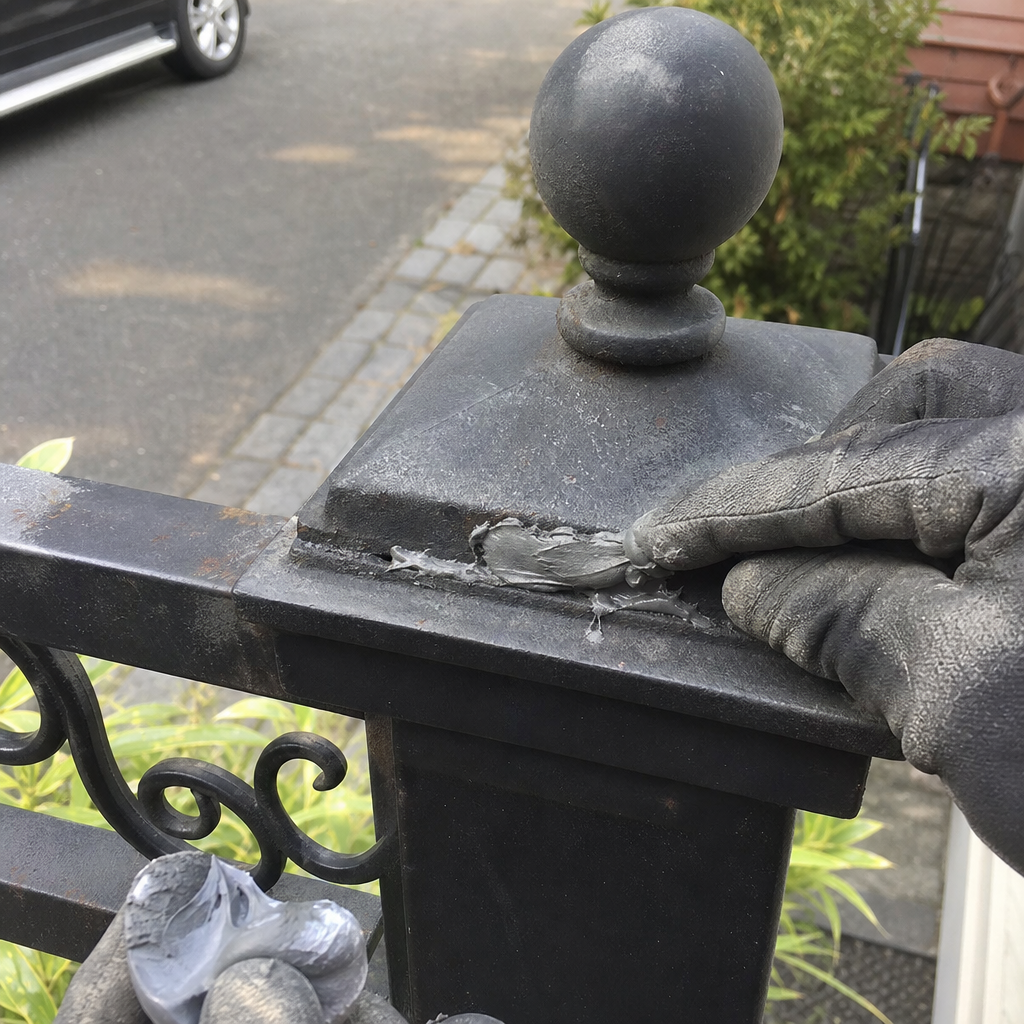
Swing gates are the default for Sandy’s post-and-rail and pipe-panel fencing — they match the rural character, and they work with the terrain. But wet snow is the enemy. A heavy, wet Sandy snowfall can pile against a swing gate and overload hinges that were fine for Portland’s lighter powder. We reinforce with strut braces, spec heavier-duty hinges with grease fittings (so you can maintain them), and set posts in concrete piers deep enough to resist the lever action of snow load plus wind. We also check your gate panel material: wooden gates look right for Sandy’s aesthetic, but they need hardware that won’t seize from ice expansion and construction that accounts for moisture cycling in the joints.
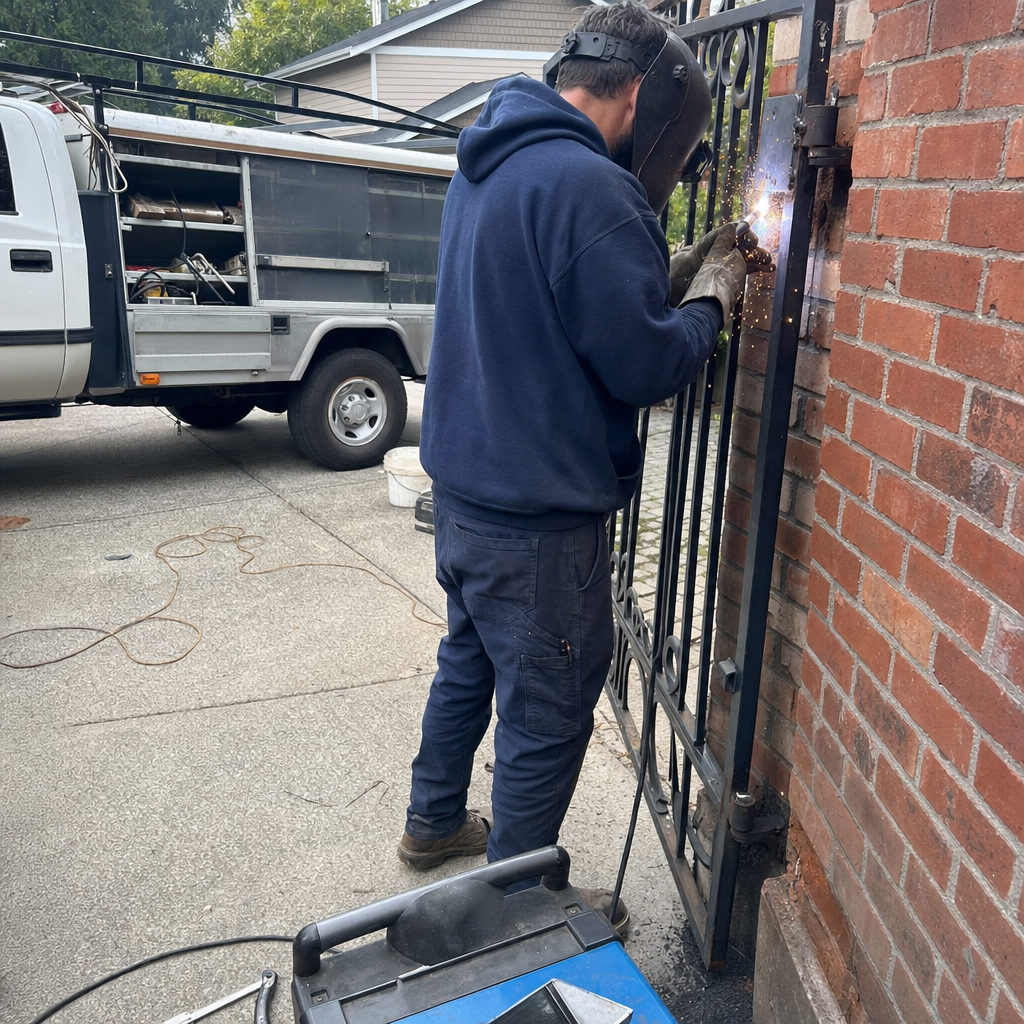
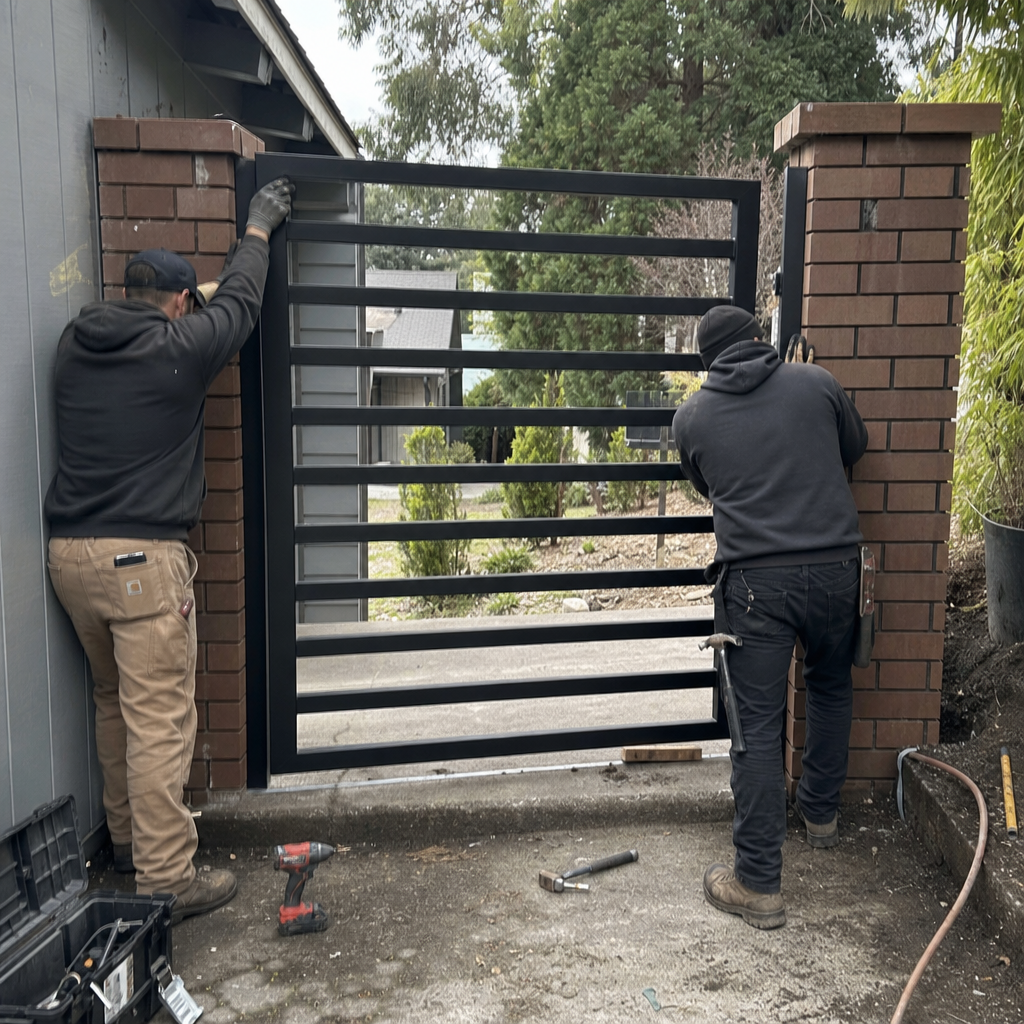
Pedestrian Gate Installation in Sandy
Not every gate is for vehicles. We install pedestrian gates for garden enclosures, pool areas, and property line access on Sandy’s mixed suburban-rural lots. Even these smaller gates need Sandy-specific thinking: latch hardware that won’t ice up, hinges that drain rather than trap moisture, and frames built to stay square when the ground shifts. We match pedestrian gates to your existing fence style — whether that’s the cedar post-and-rail common on older Sandy homesteads or the ornamental aluminum on newer builds near the city center.
What happens when you call
- 1
A real person answersNo phone trees — you reach a local pro.
- 2
You get an upfront price rangeHonest numbers before anyone is dispatched.
- 3
A background-checked tech heads outLicensed & insured, dispatched right away.
- 4
You approve before work beginsNothing starts until you say go.
Trusted Brands We Service in Sandy
We work on the brand you already have — or the one that actually fits your Sandy property. Our factory familiarity runs across nine major gate systems, and for this market we regularly install and service Linear, Viking, Ghost Controls, and DoorKing operators. Linear’s heavy-duty slide gate operators handle the resistance from snow-drifted gates without burning out. Viking’s swing gate systems give us the adjustable force settings we need for gates that may face varying wind and snow loads through a Sandy winter. We stock common parts and hardware for Sandy customers, so when your opener needs a new control board or your hinge needs replacement after ice damage, we’re not ordering from a warehouse three states away. From the motor to the weld, it’s under our roof.
Common Gate Installation Problems We See in Sandy Homes
- Ice expansion seizes hinges and latches. Sandy’s freeze-thaw cycles aren’t theoretical — they happen dozens of times per winter. When water gets into standard steel hinge barrels and freezes, the expansion cracks the housing or seizes the pin entirely. Wooden gates bind at the joints, and homeowners end up shouldering the gate open until something splits. We spec stainless steel or hot-dip galvanized hardware with grease fittings, and we show you the maintenance interval that keeps it moving.
- Clay soil heave misaligns sliding gate tracks. Sandy’s clay-heavy soils hold moisture and expand when frozen, then contract in spring thaw. A sliding gate track set on standard footings will shift, causing rollers to derail and the motor to strain against misalignment. We install adjustable track brackets and set posts in footings deep enough to get below the frost line — techniques that flatland contractors rarely need but that separate a five-year gate from a fifteen-year gate here.
- Heavy wet snow overloads swing gate hinges. Sandy’s snow isn’t the dry stuff. It piles, it saturates, it weighs. A six-foot wooden swing gate with wet snow stacked against it can exert hundreds of pounds of lateral force. Without strut bracing and properly spec’d hinges, the gate sags, the post leans, and by spring you’ve got a gate that drags and a post that needs re-setting. We engineer for the load, not the installation day.
- Gravel driveway gates lose alignment after winter. Properties along Bluff Road and similar Sandy rural corridors rely on gravel approaches that shift with traffic, thaw, and runoff. A gate post set in that environment without proper drainage and footing isolation will tilt as the gravel migrates. We use concrete collar footings with gravel backfill for drainage, and we set gate posts independently of the driveway surface so ground movement doesn’t transfer directly to your gate frame.
Pricing for Gate Installation in Sandy, OR
Here’s what gate installation costs in Sandy’s market, based on the jobs we’ve completed in 97055 and surrounding Clackamas County roads:
| Gate Type | Typical Range in Sandy |
|---|---|
| Single swing driveway gate, manual | $2,800–$4,200 |
| Double swing driveway gate, manual | $3,600–$5,500 |
| Sliding gate with track, manual | $4,000–$6,000 |
| Automated opener add-on (any type) | $1,800–$3,200 |
| Access control (keypad, remote, intercom) | $600–$1,500 |
| Deep footing / frost-heave reinforcement | $400–$800 additional |
What moves you within these ranges: gate material (steel vs. aluminum vs. wood), automation level, access control features, and whether your site needs the deeper footings and adjustable hardware that Sandy’s conditions demand. We don’t upsell the reinforcement — we show you the local failure mode and let you decide. Estimates are free, and David Martinez provides the quote in person, not from a satellite photo. Call (855) 275-6878 to schedule.
We Also Serve Cities Near Sandy
We install gates throughout the eastern Portland metro and Mount Hood corridor, including Damascus, Troutdale, Gresham, and Clackamas. Each area gets the same site-specific assessment — we don’t paste Sandy’s specs onto a Damascus clay hillside or assume a Troutdale installation faces identical wind exposure. If you’re on the fence about whether we cover your property, call and ask.
Serving Sandy, OR — Our Local Coverage Area
We’re based in the Sandy area and know this community well. Use the map below to see our service coverage — if you’re nearby, we can almost certainly help.
FAQs — Gate Installation in Sandy
Sandy’s elevation and clay soils produce frost lines that penetrate deeper than Portland’s milder winter conditions, and the freeze-thaw cycling heaves standard footings out of level within a season or two. We set sliding gate posts in 4-foot-deep concrete piers with adjustable track brackets — depth and hardware that would be overkill in Portland proper but that prevents track misalignment and motor burnout here. Call (855) 275-6878 and we’ll assess your specific grade and soil condition.
A standard residential opener rated for mild climates will struggle here — we’ve replaced units that failed after their first Sandy winter because drainage seals couldn’t handle saturated snow, and torque sensors weren’t calibrated for ice-resistance startup loads. We spec operators with sealed enclosures, higher IP ratings for moisture intrusion, and adjustable force settings that account for snow-drifted gates. Linear and Viking systems in particular give us the headroom we need for these conditions.
Wooden gate frames in Sandy absorb moisture during the wet season, then the freeze-thaw cycle expands and contracts the wood fibers at different rates across the grain — this stresses joints, loosens fasteners, and eventually cracks rails or stiles where hardware is concentrated. We use stainless steel fasteners (not galvanized, which can react with cedar tannins), design frames with floating joints where possible, and recommend species or treatments rated for ground-contact moisture exposure. Even with good construction, annual hinge lubrication and hardware inspection is part of owning a wooden gate in 97055.
Clackamas County requires permits for automated gates on residential properties, with specific safety requirements for entrapment protection and sight-line visibility at the driveway entrance — rules that apply whether you’re in Sandy city limits or on unincorporated acreage near Bluff Road. We handle the permit research as part of our installation process and build to UL 325 safety standards for automated gate systems, so your inspection passes without rework. David Martinez coordinates directly with Clackamas County building officials when questions arise.
Sandy’s gravel driveways shift from a combination of spring thaw softening the subgrade, runoff channeling through the gravel layer, and the freeze-thaw heave of the clay beneath. A gate post set without proper footing isolation tilts as the gravel migrates away from the base. We use concrete pier footings that extend below the gravel layer, with drainage rock backfilled around the pier collar so water moves through rather than pooling at the post base. It’s a detail that adds labor on installation day and saves a reset call in year three.
Written by David Martinez, Owner & Lead Technician at Liberty Bell Gate Repair Washington, serving Sandy and the Mount Hood corridor since 2010.