Fast, Reliable Gate Installation Across Seattle
Gate installation in Seattle typically runs $2,800–$7,500 depending on material, automation, and site conditions, with most residential projects completed in 2–4 days. We’re Liberty Bell Gate Repair Washington, and our Gate Installation team has spent 14 years building gates that survive what Seattle throws at them — not just the rain everyone talks about, but the specific cycle of moisture, salt air, and hillside geography that destroys standard installations.
We answer calls at (855) 275-6878 from Ballard to Beacon Hill, Capitol Hill to Magnolia. David Martinez, our owner and lead technician, handles the site assessment himself — no sales rep, no subcontractor guessing at your slope or your soil. We’ve installed swing gates over sloped alleys in Wallingford, double driveway gates in Queen Anne, and security gates for waterfront homes near Alki where salt corrosion eats hardware alive. Seattle’s not generic suburbia; your gate shouldn’t be either.
Why Liberty Bell Gate Repair Washington Is Seattle’s Preferred Gate Installation Company
Fourteen years, one trade. That’s the difference. David Martinez doesn’t run a handyman collective or dispatch entry-level techs from a call center — he diagnoses every job himself and leads the installation crew. Nearly 900 neighbors agree: 869 verified reviews averaging 4.7 stars, earned specifically on gate work, not borrowed from roofing or fencing jobs we tacked on.
We work on the brand you already have. Factory-familiar with nine major systems — Linear, Viking, Ghost Controls, DoorKing, and five others — so we’re not pushing a proprietary product because it’s the only one we know. From the motor to the weld, it’s all under our roof: structural welding, custom fabrication, access control integration, and parts sourcing. No chasing three contractors.
Response time to Seattle neighborhoods runs same-day to next-day for assessments. We know the permit quirks, the hillside lots, the alley access constraints. We’ve re-hung gates that swelled shut in November rains and replaced operators corroded through by Magnolia’s salt air. That local pattern recognition saves you from a gate that looks fine in August and traps your car by October.
Our Gate Installation Services in Seattle
Swing Gate Installation
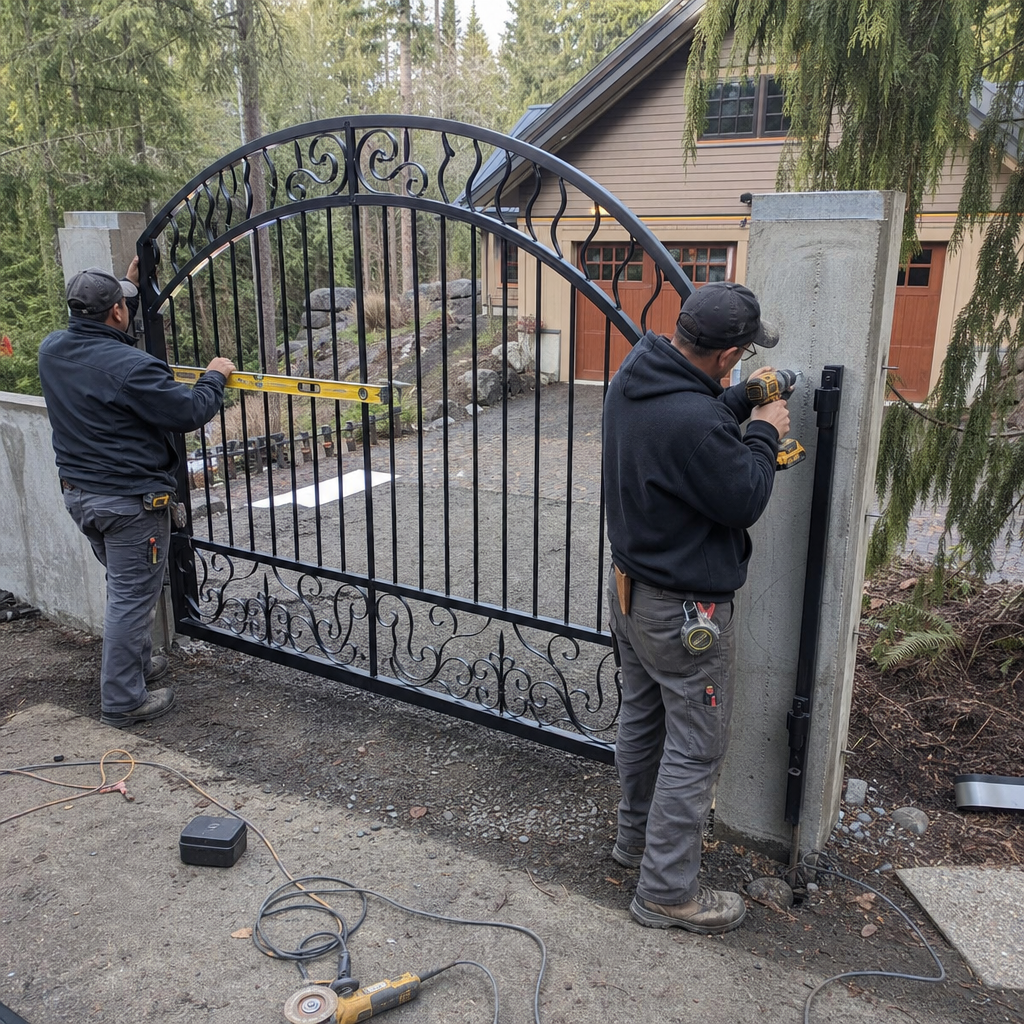
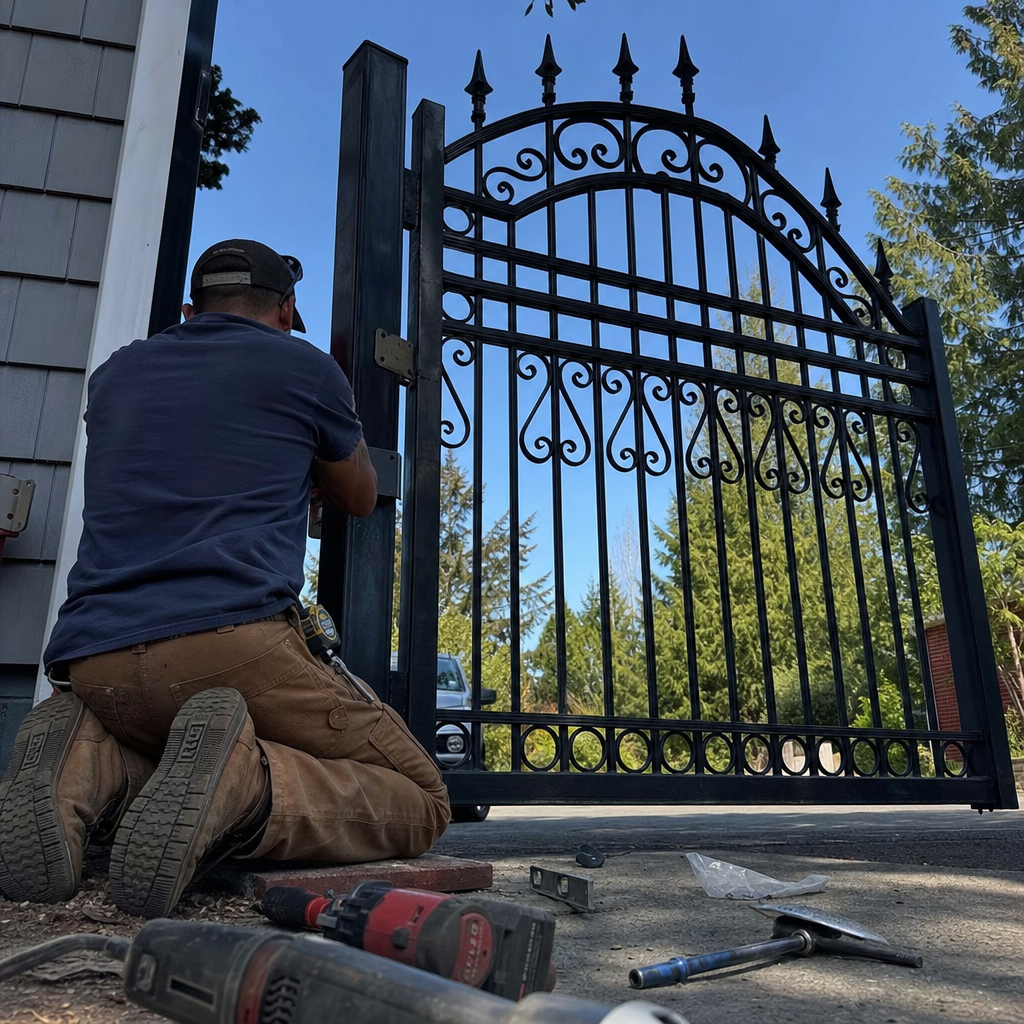
Swing gates dominate Seattle’s pre-1950 neighborhoods — Ballard, Capitol Hill, Wallingford — where alley access demands a gate that opens inward or outward on a single plane. But Seattle’s hillsides make this complicated fast. Beacon Hill, West Seattle, and Magnolia lots often slope steeply enough that a standard swing arc scrapes concrete or leaves a 6-inch gap at one corner. We calculate custom swing arcs and adjustable ground-clearance hinges for every installation. David’s field measurement includes your driveway’s fall line, not just the gate opening. We’ve seen too many “standard” installs that work in dry July and grind against pavement by wet January.
Double Gate Installation
Double gates — dual swing panels meeting in the middle — solve width problems on shared driveways and wider alley entrances common in Seattle’s Central District and Columbia City. The catch: both leaves must stay in plane through our wet-dry cycles, or you’ll fight a latch that quits aligning by Thanksgiving. We use marine-grade stainless hardware and adjustable drop-pins, and we set the posts deeper than code minimum because Seattle’s clay-heavy soils shift with winter saturation. A double gate we installed on a Capitol Hill alley last year used galvanized steel frames inside western red cedar cladding — the wood moves, the steel stays true, the gate stays latched.
Security Gate Installation
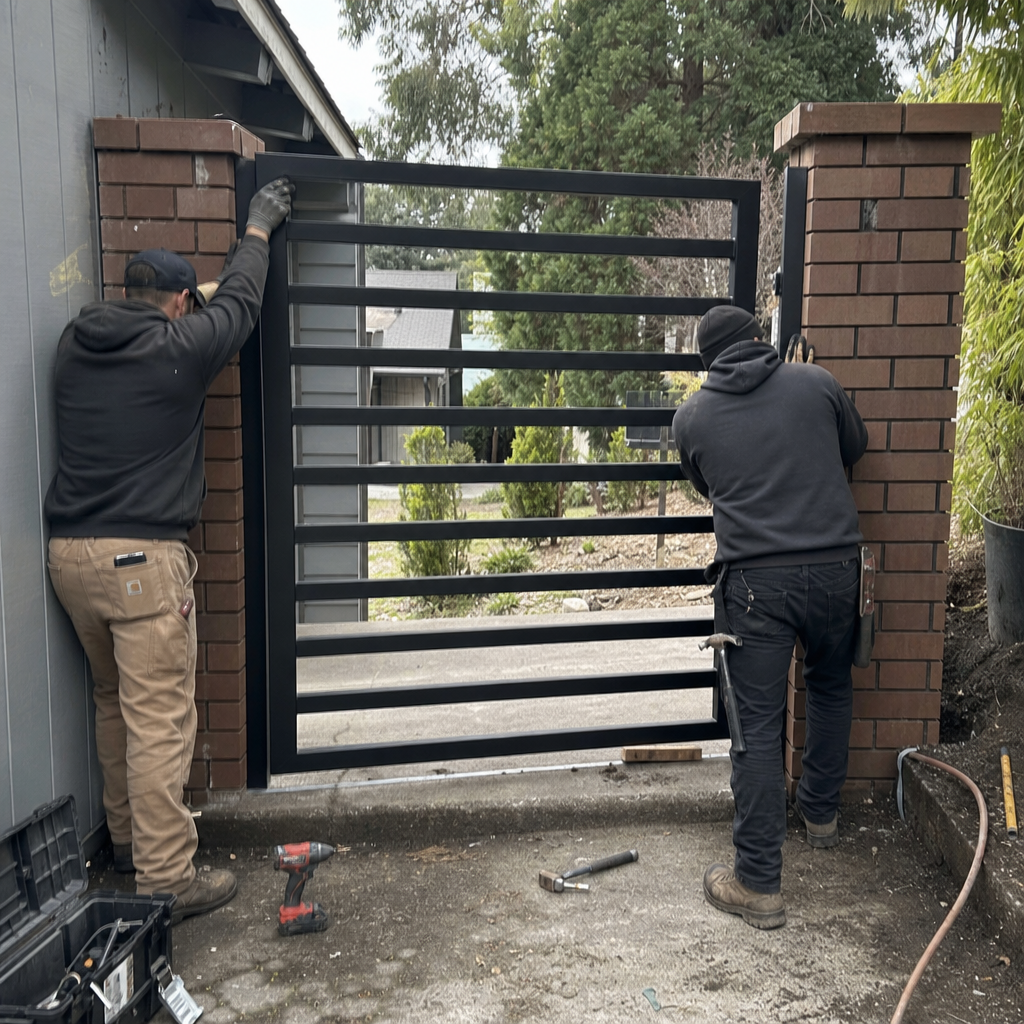
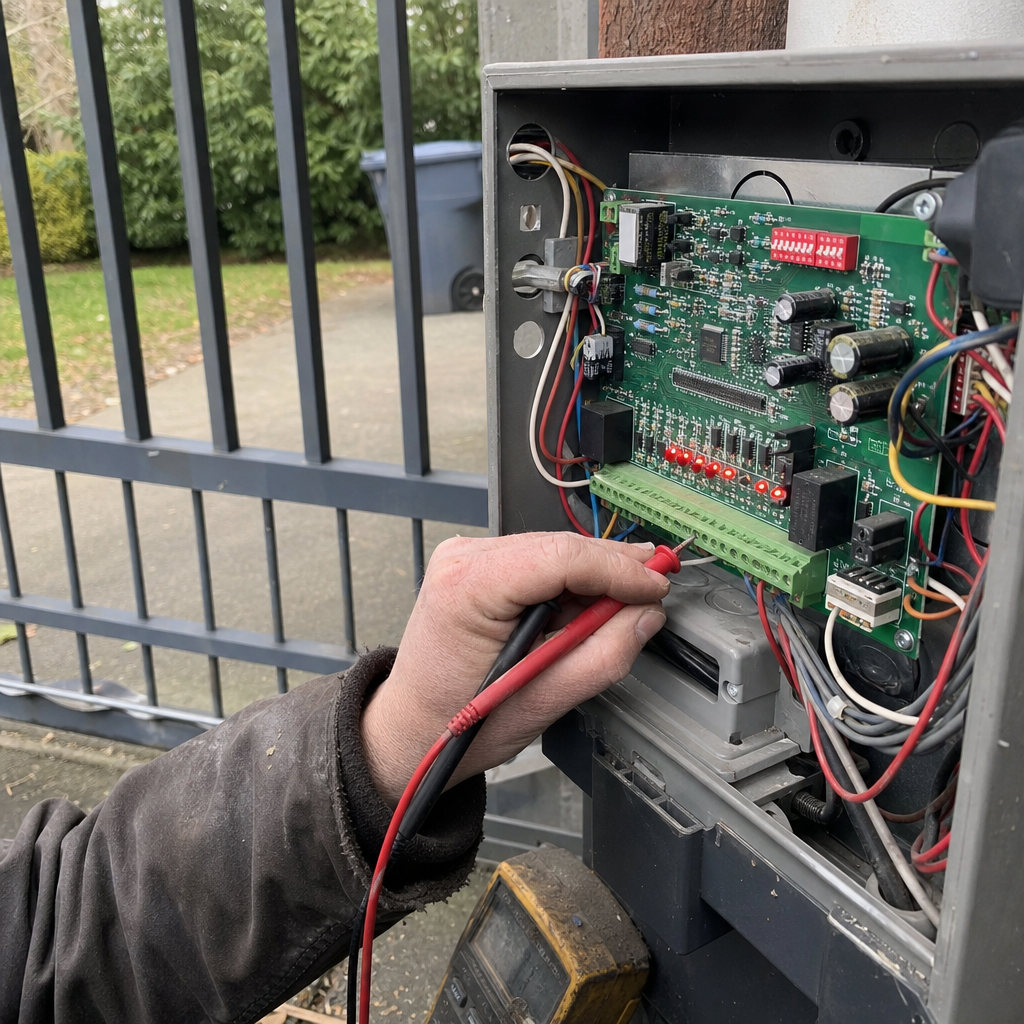
Seattle’s alley-gate culture — detached garages reached through narrow passages behind the main house — creates a specific security need most cities don’t have. Your garage isn’t attached; your vulnerability point is that back gate, often hidden from street view and poorly lit. We install security gates with integrated access control: keypad, fob, or smartphone-operated, with automatic locking and manual override for power outages. For Ballard and Fremont alley garages, we spec tamper-resistant hinges and concealed latch mechanisms. The gate should slow down someone with bad intentions, not you coming home with groceries.
Sliding Gate Installation
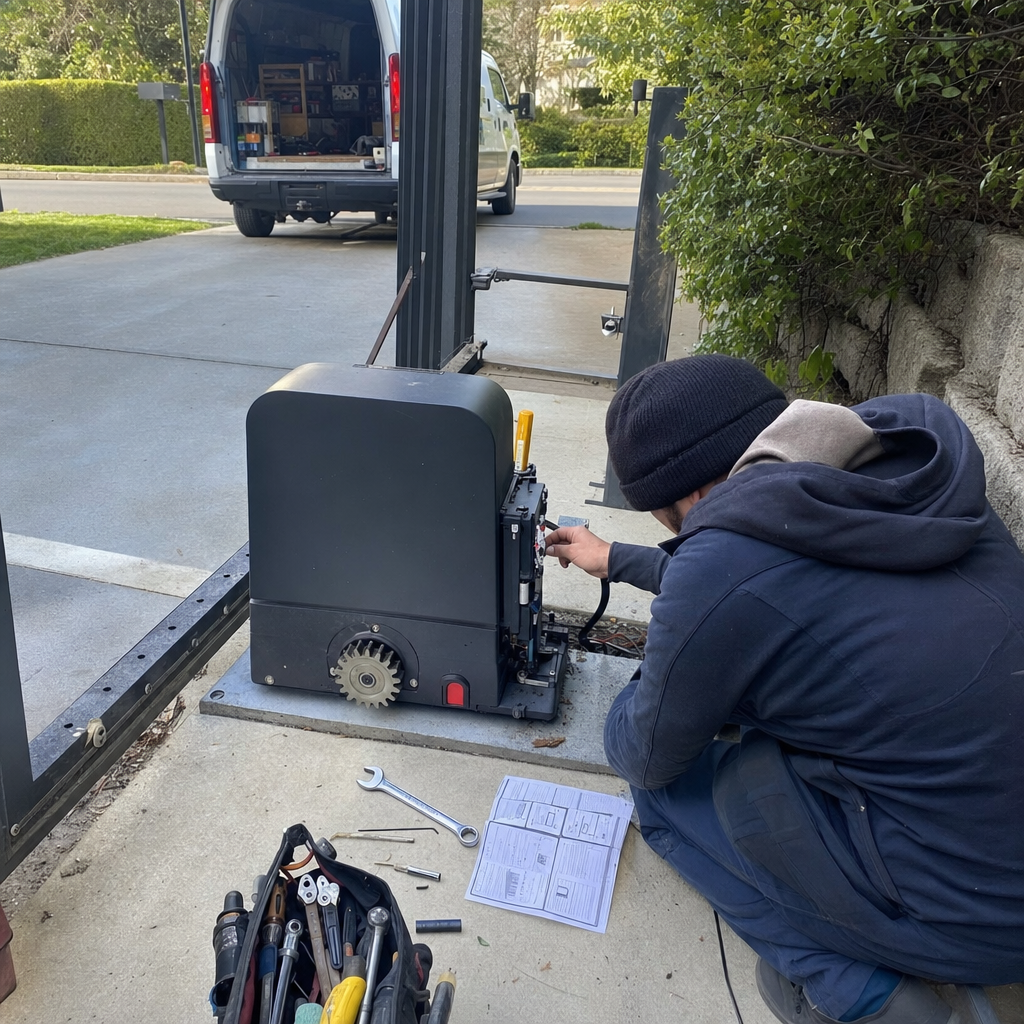
When slope kills the swing option, sliding gates run parallel to your fence line on a track or cantilever system. We see this most on tight Beacon Hill lots where a swing gate would block the sidewalk or on waterfront properties in Magnolia where setback limits kill the arc. Seattle’s challenge: track systems clog with fallen leaves, moss, and the fine grit that washes off our cedar-shake roofs. We spec debris-resistant track covers and self-cleaning roller designs, and we pitch the track slightly so water runs off, not pools.
Driveway Gate Installation
Your main entrance gate sets the tone and takes the weather head-on. In Seattle, that means designing for 160 sunny days a year and 205 wet ones. We use western red cedar when clients want local material — it matches the regional aesthetic — but we engineer the frame and hardware for moisture reality. Galvanized operators, stainless hinges, nylon rollers that don’t rust. The gate we installed near Shilshole Bay last year used a powder-coated steel frame with cedar infill: the steel carries the load, the cedar provides the look, and neither relies on the other for structural integrity.
Pedestrian Gate Installation
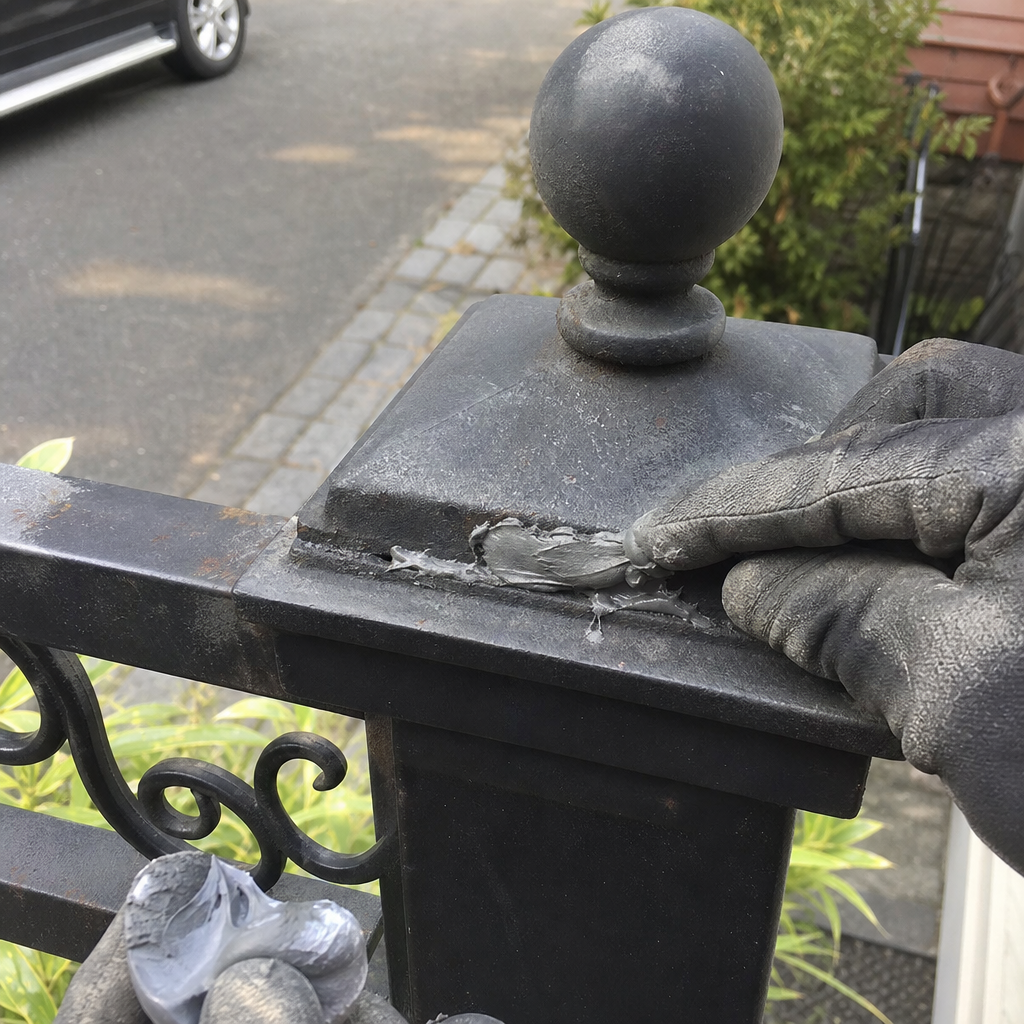
Side-yard access, garden entries, paths between properties — pedestrian gates see more daily use than driveway gates and get less maintenance attention. We build them with the same hardware spec as our automatic gates because Seattle’s climate doesn’t care about size. A pedestrian gate in a shaded Capitol Hill walkway gets the same moisture load as a driveway gate. We use adjustable self-closing hinges and latches that tolerate seasonal wood movement, and we set posts in concrete below frost line because freeze-thaw heaving misaligns everything.
What happens when you call
- 1
A real person answersNo phone trees — you reach a local pro.
- 2
You get an upfront price rangeHonest numbers before anyone is dispatched.
- 3
A background-checked tech heads outLicensed & insured, dispatched right away.
- 4
You approve before work beginsNothing starts until you say go.
Trusted Brands We Service in Seattle
We don’t limit you to one manufacturer’s ecosystem. David’s factory-trained on nine major brands — Linear, Viking, Ghost Controls, and DoorKing among them — which means we install what fits your gate, not what fits our supplier contract. For Seattle’s corrosion environment, we often spec Linear and Viking operators with sealed housings and stainless internal components. We stock common parts locally: hinges, rollers, control boards, safety sensors. When your automatic gate quits opening in a November downpour, we’re not waiting two weeks for a shipment from Ohio.
Common Gate Installation Problems We See in Seattle Homes
- Cedar gates swell and bind every fall. Seattle’s relative humidity rarely drops below 70%, and western red cedar — the dominant local material — absorbs moisture cyclically. A gate that swings freely in August will often bind shut by November. We leave deliberate seasonal gaps during summer installations, knowing the wood will expand.
- Steel hardware corrodes years faster than inland climates. Hinges, latches, roller brackets, and operator chains show surface rust within a single rainy season near salt water. We spec galvanized or stainless hardware as standard, not upgrade.
- Hillside driveways demand custom geometry. Standard swing arcs fail on Beacon Hill, West Seattle, and Magnolia slopes without ground-clearance adjustments. We measure slope grade and calculate arc clearance before ordering materials.
- Alley gates sit in perpetual shade with moisture exposure from both sides. Seattle’s pre-1950 neighborhoods — Ballard, Capitol Hill, Queen Anne — use alley systems with detached garages. These gates never see drying sun and degrade faster than street-facing installations.
Pricing for Gate Installation in Seattle, WA
Here’s what gate installation costs in Seattle’s current market:
| Service | Typical Range |
|---|---|
| Manual pedestrian gate (wood, standard hardware) | $2,800–$4,200 |
| Manual driveway swing gate (single or double) | $4,500–$6,800 |
| Automatic swing gate with operator | $6,200–$9,500 |
| Sliding gate with track system | $7,000–$10,500 |
| Security gate with access control integration | $8,500–$14,000 |
| Custom fabrication / structural welding add-on | $1,200–$3,500 |
Material drives the spread: western red cedar costs more than pressure-treated pine but lasts longer in our climate; steel-framed gates with powder coating add durability for waterfront exposure. Automation level matters — a basic keypad operator runs less than smartphone-integrated access control with video intercom. Site conditions affect labor: hillside grading, existing post removal, electrical run to the gate location. We provide itemized quotes before work starts; call (855) 275-6878 for a free estimate at your Seattle property.
We Also Serve Cities Near Seattle
We install gates throughout the metro area — White Center, Mercer Island, Bellevue, and Boulevard Park — with the same site-assessment approach David uses in Seattle proper. Each microclimate gets different hardware specs: salt-air protection for waterfront Mercer Island, wind-load engineering for exposed Boulevard Park lots, slope calculations for Bellevue’s eastside hills.
Serving Seattle, WA — Our Local Coverage Area
We’re based in the Seattle area and know this community well. Use the map below to see our service coverage — if you’re nearby, we can almost certainly help.
FAQs — Gate Installation in Seattle
The wood absorbs moisture from Seattle’s 70%+ relative humidity and swells, tightening in the frame or against the jamb. We re-hang with calculated seasonal gaps and use adjustable hinges that let you tweak clearance without disassembling the gate. Call (855) 275-6878 before October — it’s easier to gap a gate correctly in dry weather than to free one that’s already swollen shut.
Yes. Salt-air corrosion multiplies oxidation rates; unpainted iron hardware shows surface rust within one rainy season. We spec marine-grade stainless hinges, galvanized operators, and powder-coated steel frames for Magnolia and Alki installations. The upfront cost difference pays back in years of operation without seizure or replacement.
Usually, yes, with custom engineering. We measure the slope grade, calculate the swing arc clearance, and often use rising-butt hinges or a slight upward pivot to prevent ground contact. Ground-clearance adjustments and corrosion-resistant hardware are standard on our hillside installations. David assesses slope feasibility during the free site visit.
Twice yearly: late September before the heavy rains, and late March after the wet season ends. We lubricate hinges and rollers, clear track debris, test safety sensors, and check operator housing seals. Seattle’s moss and leaf fall clog mechanisms that stay clean in drier cities. We offer maintenance contracts because reactive repairs cost more than prevention in this climate.
Yes — it’s a specialty of ours. Seattle’s alley-gate configuration, with detached garages accessed from narrow passages, creates a specific vulnerability we address with automatic locking, access control integration, and tamper-resistant hardware. We’ve installed security gates for Ballard, Capitol Hill, and Central District alley garages, each configured to the alley width and access pattern.
Written by David Martinez, Owner & Lead Technician at Liberty Bell Gate Repair Washington, serving Seattle since 2010. Call (855) 275-6878 for a free estimate.